Hot Chamber Zinc Alloy Die Casting Molds: What Products Are Typically Produced?
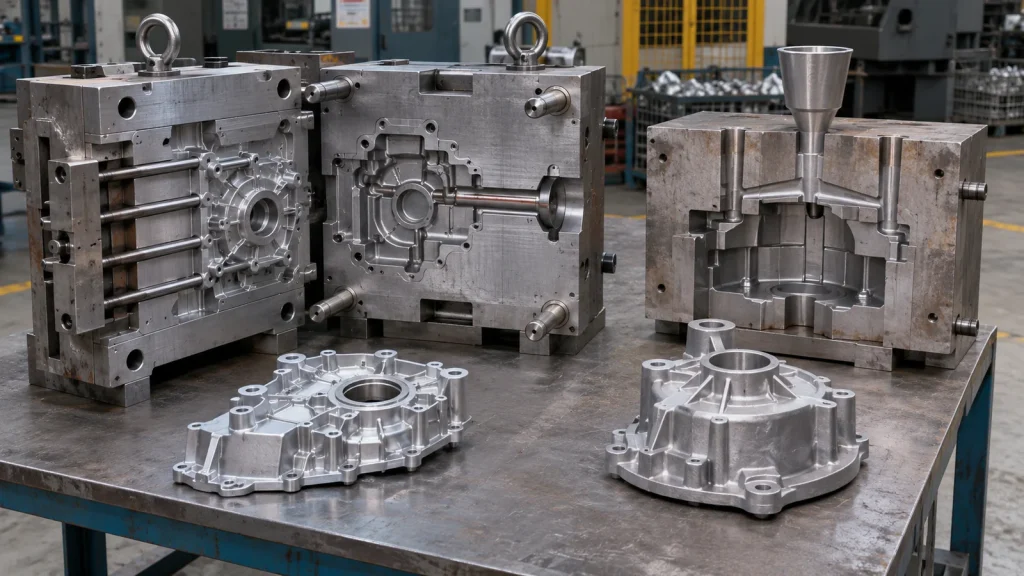
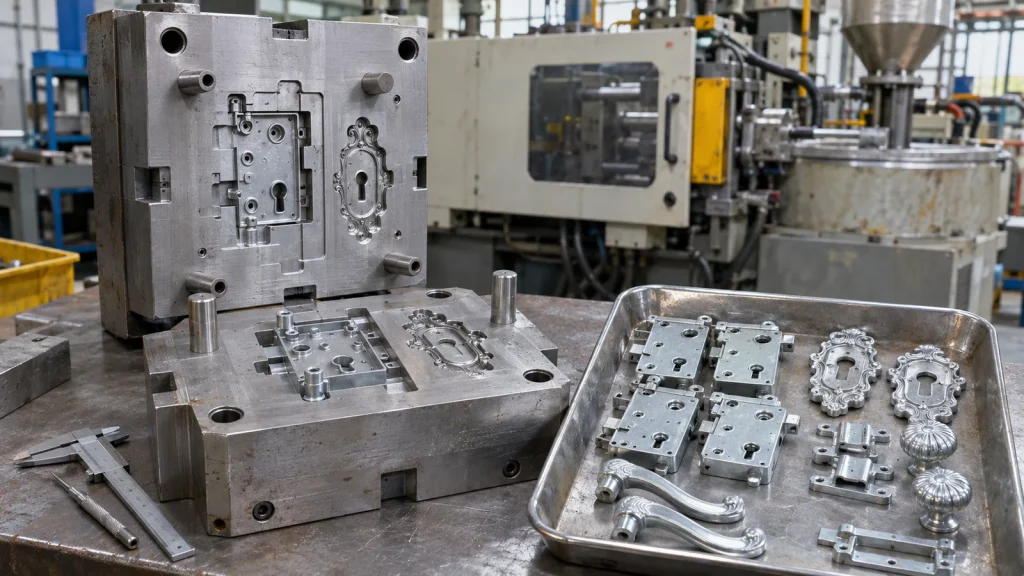
Hot chamber zinc alloy die casting is a high-volume process for small to medium metal parts that need fine detail, thin walls, tight tolerances and a good cosmetic…
In die casting, cores and inserts are not passive shaping features; they are localized thermal elements that reshape heat flow, cooling rates, and the solidification front. Cores are…
This article explains the fundamental principle behind removable and interchangeable inserts in die casting molds: modularity that separates the structural mold base from the precision geometry inserts. It…
A die-casting mold base is the standardized steel framework that holds, aligns, supports, and mounts the cavity and core inserts of a die-casting mold. It is not the…
This article explains the differences between hot chamber and cold chamber die casting by focusing on the injection interface: an integrated, submerged gooseneck system versus a separate shot…
The conceptual difference between a die casting mold and a gravity casting mold is not mainly about cavity shape or whether the tool is reusable. It is about…
A zinc alloy die casting mold, often called a die, is a reusable precision steel tool that shapes molten zinc alloy into finished or near-net-shape parts under pressure.…